
Introvert or Social Anxiety? Here's How to Tell the Difference
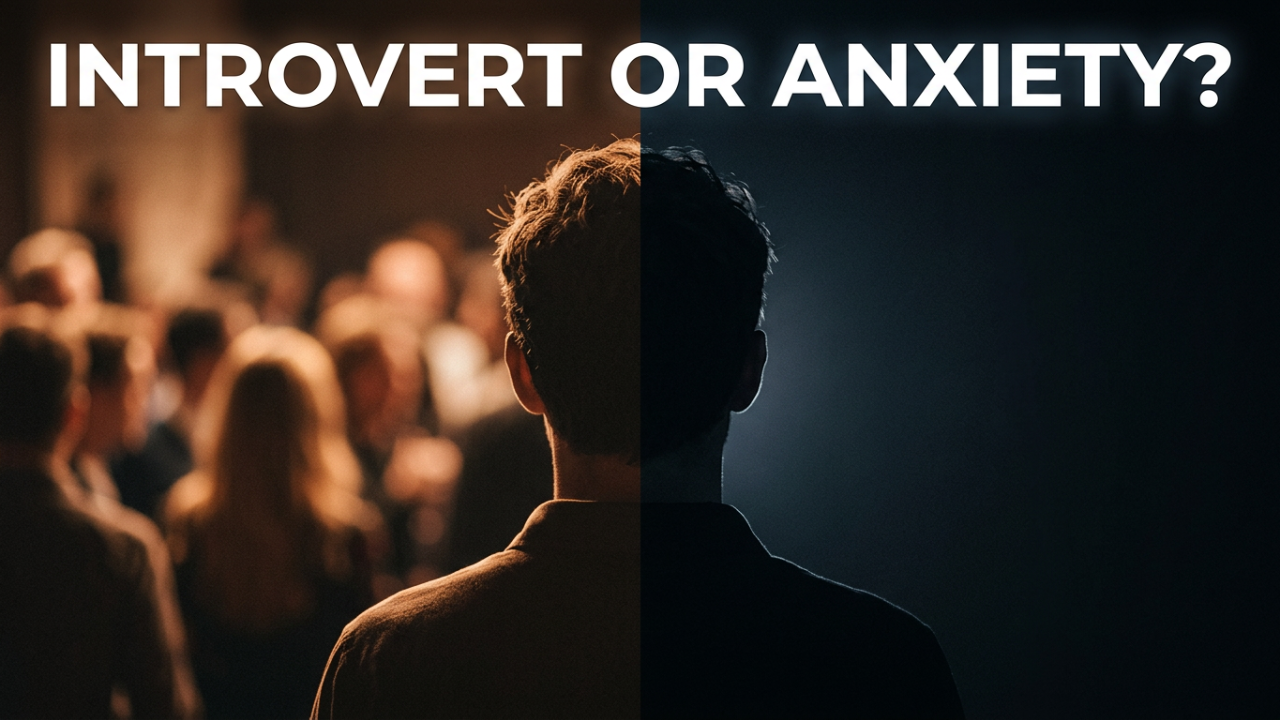
You cancel the plans. Reading a book or playing some video games sounds much better. And honestly? You feel relief.
If you identify as an introvert, that probably makes total sense. Of course you feel better alone - you're just wired that way.
But what if some of that relief isn't about being introverted at all? What if some of it is your nervous system coming down from a false alarm?
There's an overlap between introversion and social anxiety that doesn't get talked about enough. And understanding where one ends and the other begins could genuinely change things for you.
I say this as an introvert myself - this distinction matters.
What Introversion Actually Is
Let's start with the science, because it's actually fascinating.
Researchers have mapped the brains of introverts and extroverts and found genuine, measurable differences. Introverts have higher levels of electrical activity in their brains - both at rest and during tasks. Our brains are processing more information, more of the time.
That information also takes a longer route - through more complex areas, including the parts involved in planning, decision-making, and self-talk, sometimes called meta-thinking. There's also more activity in the area of the brain responsible for inner monologue.
So when an introvert is at a party, their brain is running commentary the entire time. Every face, every word, every possible interpretation of what someone just said - processed, analysed, filed. That's what the energy drain is. Not disliking people or socialising. Just a higher processing load.
The introvert energy drain isn't about disliking people. It's a higher cognitive processing load.
Extroverts get a strong hit of dopamine from social stimulation. Noise, novelty, lots of people - it charges them up. Introverts get their good feelings from a different chemical: acetylcholine. It kicks in during quiet, focused, inward moments - deep conversation, reflection, reading. Not chaos. Not small talk with twenty strangers.
That's completely valid. That's just how your brain works.
Where Anxiety Enters the Picture
Anxiety does something that mimics and amplifies all of this.
It makes socialising feel genuinely threatening. Your heart rate goes up. You're scanning for judgement. You're replaying what you said. You leave exhausted.
And when you get home? Relief.
But here's the thing - that relief might not be what you think it is.
For a genuine introvert, the relief after socialising is a bit like putting down a heavy bag. A satisfied tiredness. Your brain got a workout, now it gets to rest.
But for someone whose anxiety has been running in the background the whole time, that relief is something different. That's your nervous system standing down from a threat response. It's the relief of escape, not restoration.
Those two things feel remarkably similar from the inside.
A Personal Example
I want to share something from my own experience, because I think it illustrates this really well.
I'm an introvert. And when I'm somewhere with a lot of people around - like an airport - I notice my meta-thinking running hot. My brain is calculating, processing, tracking all these people moving around me. Running commentary on everything.
And then, after a while, it konks out. The processing gets fatigued and quietly shuts off. I'm left with just my in-the-moment thoughts. No analysis. No commentary.
And here's the thing - it's kinda peaceful. Not distressing.
I'm just wandering around, taking things in as they come. Almost feeling a little buzzed. Present. Calm.
Introvert fatigue, when it's not tangled up with anxiety, resolves into something that can actually feel quite good.
Now - if I had anxiety running alongside that? The moment that meta-processing dropped off, I'd be worried about it. "Why am I not tracking everything? Am I missing a threat? Something feels off." The anxiety would fill that space immediately.
But without the anxiety, there's just ease. That's the difference.
How the Avoidance Story Gets Written
If you have enough experiences where socialising feels awful and coming home feels like safety, your brain starts writing a story: "I must just not be a people person. I'm a loner. I'm an introvert through and through."
And maybe that's partially true. Maybe you are introverted. But your anxiety has been colouring every social experience with dread, and it's hard to know what you actually enjoy when everything's been filtered through that.
Here's how the avoidance cycle tends to go:
- You feel dread before a social event (anticipatory anxiety)
- You push through it, but spend the whole time anxious about how you're coming across
- You come home depleted and relieved
- Your brain logs: "socialising is unsafe, home is safe" - so next time the dread comes earlier and heavier
Over time, your social world gets smaller. Invitations get declined. Friendships drift. And because it happened gradually, it's easy to frame it as a lifestyle choice - "I'm just a homebody, I'm just introverted" - rather than recognising it as anxiety tightening its grip.
Each time you avoid, you're confirming the story your anxiety is telling you.
Why Introverts Still Need People
We introverts still need people - we just need them differently.
The research is clear that humans are one of the most social species on the planet. Connection is deeply tied to our sense of safety and wellbeing. And prolonged social isolation is one of the strongest predictors of depression we have.
Introverts need smaller doses. Quality over quantity. But still with regularity. One deep conversation over a crowded party - that's fine, that's healthy. But complete withdrawal because it all feels too hard - that's not introversion thriving. That's anxiety winning.
How to Tell the Difference
Here's a question worth sitting with: when you imagine a low-pressure social situation - a quiet coffee at home with a close friend, a small dinner with people you trust - does that sound genuinely good? Or does even that carry some weight of dread?
Introverts, in the right setting, do enjoy people time.
If every social situation, no matter how low-key, feels like something to get through rather than something to enjoy - that's worth paying attention to. That's not your introverted nature talking. That's anxiety adding a layer of threat to something that doesn't need to feel threatening.
And the good news is - that layer can be removed.
What This Means for You
The goal here isn't to turn you into an extrovert. You might be a dyed-in-the-wool introvert, and that's wonderful - it's got some real advantages.
But you deserve to experience socialising without the threat alarm going off the whole time. You deserve to come home tired in that satisfied, pleasant way - not wrung out and rattled. You deserve to find out what you actually enjoy, without anxiety skewing the results.
I help people with social anxiety all the time - many of them introverts - and the shift I see when they start to separate their anxiety from their identity is remarkable. It's not just the anxiety going down. It's a quiet rediscovery of who they actually are.
When the anxiety comes down, a lot of my clients discover they actually really like people.
If that resonates, I've put together a free anxiety guide that walks you through the neurobiology and physiology of anxiety and how to get started reducing it. It's completely free - my gift to you.

