SOCIAL
ANXIETY
CAN BE TREATED


Does This Sound Familiar?
You walk into a room and feel like everyone's watching you. Like everyone can see that you're nervous. Like you're about to say something stupid and everyone will judge you for it. Maybe it's at work. You have something to say in a meeting, but you stay quiet. Because, what if your voice shakes? What if people think your idea is dumb? So you say nothing. And you feel awful about it later.
Or maybe it's social events. You get invited to a party. Or a dinner. Or a gathering. And you want to go. But the thought of making small talk, of being judged, of saying the wrong thing — it's too much.
So you decline. And you spend the night at home, replaying every social interaction from the last week. Did I sound stupid? Did they think I was boring? Why did I say that? You want to speak up at work. Make friends. Go to social events without feeling like you're on trial.
You want to be yourself without constantly worrying what people think. But instead, you're stuck in your head. Overthinking everything. Avoiding situations where you might be judged. And feeling lonely because of it.
If that's you, I want you to know something.
You're not broken. Your brain is doing exactly what it's designed to do. It's just predicting threats that aren't there. And I'm going to show you how to halve your social anxiety in the next 30 days.
What You've Probably Tried
(And Why It Didn't Work)
Let me guess what you've already tried.
Exposure therapy
You've been told to "just put yourself out there." So you force yourself into social situations. And it's awful. You white-knuckle through it, feeling anxious the whole time. And afterwards, you feel exhausted and discouraged.
Affirmations
"I'm confident. I'm worthy. People like me." Maybe they help for 5 minutes. Then you walk into a room and your mind goes blank.
Alcohol
A drink or two takes the edge off. But that's not a solution. That's a Band-Aid. And it doesn't work in job interviews or morning meetings.
Avoidance
Don't go to the party. Don't speak up at work. Stay home where it's safe. And that works for a while. But your world keeps getting smaller. And the anxiety? It doesn't go away. It just gets louder every time you avoid something.
Here's why those things didn't work
Exposure therapy without the right foundation just retraumatises you. Affirmations don't address the root cause. Alcohol numbs the symptoms, but it doesn't retrain your brain. And avoidance? That's the worst thing you can do. Because every time you avoid a social situation, you're teaching your brain that social situations are dangerous. And your brain believes you.
Why Social Anxiety Keeps Happening
Social anxiety happens because your brain is predicting rejection or damage to your reputation.
When you walk into a social situation, your brain scans for threats:
"What if I say something stupid?"
"What if they judge me?"
"What if I embarrass myself?"
Your amygdala (the threat-detection part of your brain) goes, "Danger! We need to protect our reputation!" It triggers a cortisol response. Stress hormones flood your system.
Your heart races. Your face gets hot. Your mind goes blank.
Which makes you more anxious. Which makes it harder to think clearly. Which makes you more likely to stumble over your words or say something awkward.
And now your brain has even more evidence that social situations are dangerous.
And here's the kicker — your prefrontal cortex, the part of your brain that's supposed to help you stay calm and think clearly? It goes offline when you're flooded with cortisol.
That's why you can't think of what to say in the moment. That's why you replay conversations later and think, "Why didn't I say that?"
Your brain was in survival mode. It wasn't thinking about being witty or charming. It was thinking about protecting you from perceived danger.
And no amount of "just be confident" is going to fix that.

Our 3-Step Solution
Here's how we fix it. We use an approach that addresses the root cause of social anxiety — not just the symptoms. Most treatments try to help you cope with anxiety or push through it. We do something different. We retrain your brain's threat detection system, so it stops seeing danger where there isn't any. We lower your body's stress response so your thinking brain can actually function in social situations. And we give your mid-brain the experiences it needs to learn that you're safe, so social situations start feeling natural instead of terrifying. This isn't about managing anxiety. It's about eliminating it at the source.

STEP#1 Lower Your Adrenal Baseline
When you've been living with social anxiety, your nervous system is constantly running hot. Your body is in a state of hypervigilance, which is why walking into a social situation feels so overwhelming.
We teach you specific neurological retraining techniques to bring your adrenal baseline down so your prefrontal cortex comes back online — which means you can think clearly and be present in conversations instead of stuck in your head.
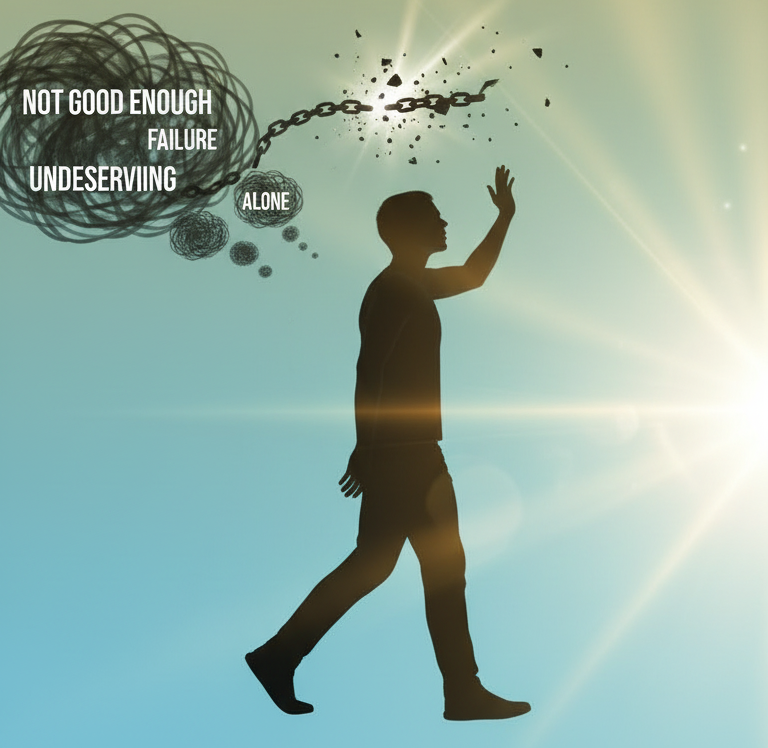
STEP#2 Eliminate Predictions of Rejection
Your social anxiety follows a pattern: you walk into a social situation, your brain predicts rejection, it releases stress hormones, you feel anxious and stumble over your words — which gives your brain even more evidence that social situations are dangerous.
We teach you evidence-based cognitive techniques that rewire how your brain interprets social cues, showing it that a pause in conversation isn't rejection and most people are too busy worrying about themselves to judge you as harshly as you think.
Once your brain learns this, the social anxiety cycle breaks.

STEP#3 Change How Social Situations Feel
Up till now, every time you've avoided a social situation, your brain has been learning "this is dangerous" — and that gets reinforced, keeping you stuck.
We guide you through a structured process of practising in low-stakes situations first, building confidence, then moving to bigger challenges in a way that retrains your brain to see you're safe.
This gives your mid-brain the input it needs to rewrite its stored assumptions, so instead of releasing fear feelings, you get pleasant endorphins — and that's when the real transformation happens.
Ready to Get Started?
I've got three different paths for you, depending on where you're at and what kind of support you need.