
Blog
How to Overcome Fear of Doctors and Hospitals (Iatrophobia)

There's something you've been meaning to get looked at.
It's been there for a few weeks. Maybe longer. You know you should book an appointment. So instead, you Google it - which, predictably, doesn't help. You tell yourself you'll just keep an eye on it.
Eventually you book. And the moment that confirmation lands in your inbox, something shifts. That night you sleep badly. The day of, you feel it before you've left the house. By the time you're in the waiting room - fluorescent lights, names being called through the intercom - your heart is moving faster than it should be for someone just sitting in a plastic chair.
You know nothing bad is going to happen.
But that knowledge doesn't actually help. Does it.
If that's familiar, you're in the right place. This page covers what causes a fear of doctors and hospitals, why the usual advice doesn't fix it, and how to work through a complete virtual exposure therapy series - all free, all here.
What is the fear of doctors called?
The ...
Fear of Birds: Understanding and Overcoming Ornithophobia
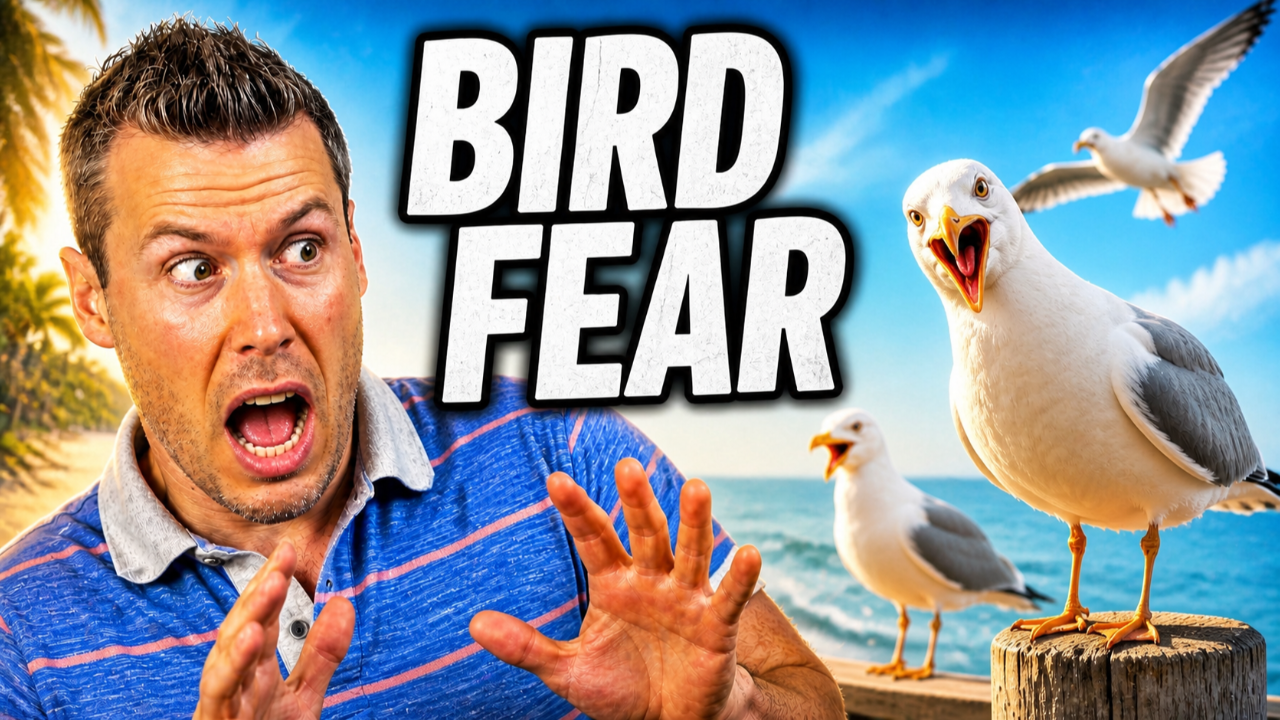
If you have a fear of birds, this article is for you - not the general unease most people feel when a seagull gets too close at the beach, but a genuine, persistent fear that is affecting where you go, what you do, and how you live your day-to-day life.
This is called ornithophobia, and it is more common, more treatable, and more understandable than most people realise.
Over the last 12 years I have helped many people work through fears just like this. Below I will explain what causes it, how it works in the brain, and most importantly, the step-by-step process that actually fixes it.
Watch: Fear of Birds Explained
What is ornithophobia?
Ornithophobia is the clinical name for an intense, persistent fear of birds. The word comes from the Greek "ornithos" (bird) and "phobos" (fear).
To be classified as a phobia rather than general discomfort, the fear needs to be:
- Out of proportion to the actual threat
- Present for at least six months
- Causing you to change your behaviour ...

